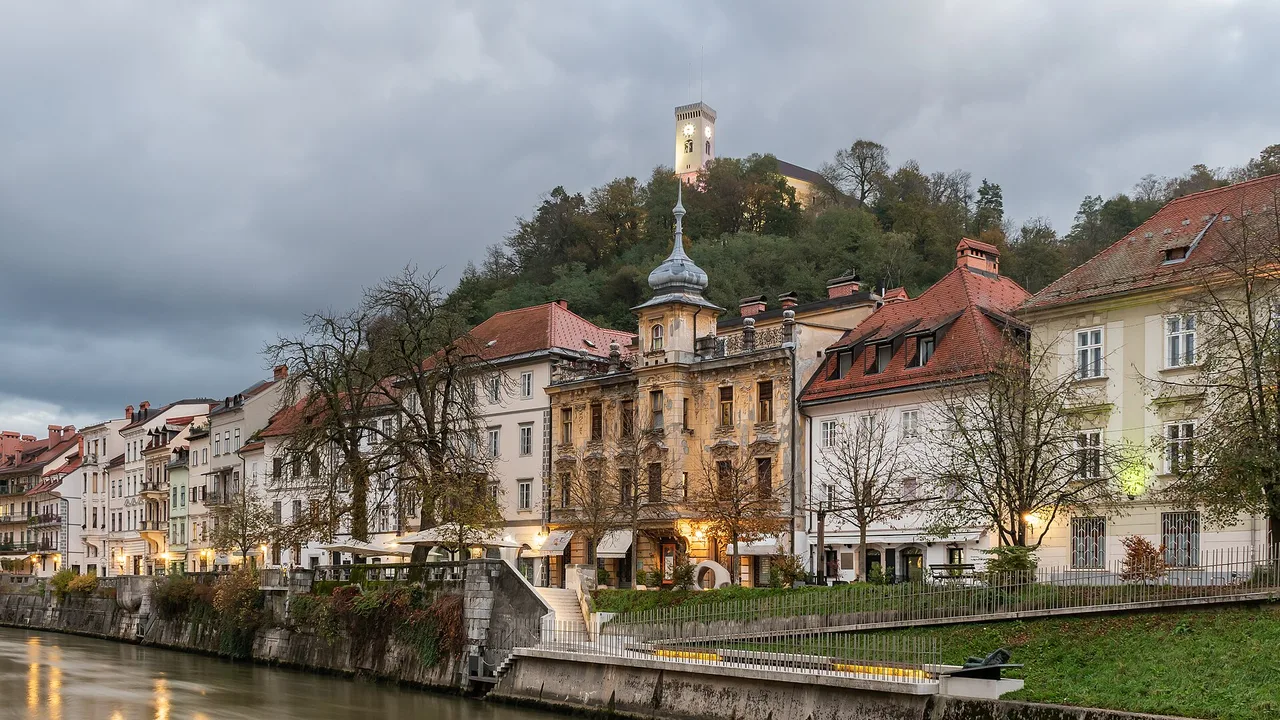
Give Ljubljana two full days, three with a day trip added. The centre is small and largely pedestrianised, so one night is a rushed look and two lets you see the castle, walk the river and still sit down for a long dinner. Stay in or beside the old town, and take the airport bus to the main station rather than paying for a taxi you don’t need.
In winter there’s a reason to come that summer lacks: the city switches on its festive lights on the Friday before Advent (27 November in 2026) and keeps them up into early January, which turns the old town into the main event rather than the backdrop.
From the airport to the centre
Ljubljana Jože Pučnik Airport is about 26 kilometres from the centre, around 20 minutes by car according to Visit Ljubljana. There are three ways in.
| Way | What to know |
|---|---|
| Public bus | Arriva, about 30 minutes to the central bus and railway station, €4.00 on weekdays and €3.00 at weekends and on public holidays in Arriva’s timetable search; buy the ticket on board or at the machine at the airport stop |
| Shared shuttle | GoOpti at the airport’s own sales point; Visit Ljubljana also lists Nomago and other shuttle firms |
| Taxi | Metered; ask for an estimate and a receipt |
The bus is the sensible default, as long as your flight lands inside its hours. It doesn’t go further than the main bus and railway station, which is where trains from other Slovenian towns arrive, so you can walk to most central hotels or change onto a train at the railway station. Since 24 August 2026 the bus station has worked from a temporary site along Masarykova cesta, so allow time for the walk to the platform. Arriva’s timetable search, which the airport page links to, showed the following for 16 to 22 November 2026; timetables change with the season, so check arriva.si for your date.
- Airport to city, Monday to Friday: the first bus leaves at 06:02 (a slow 1 hour 4 minutes) and the first fast one at 07:08. From about 09:00 the buses leave twice an hour until 21:00, and a last departure follows at 22:44. The ride takes 30 minutes on most runs.
- Airport to city, Saturday and Sunday: buses leave at about 06:00 and 08:00, then from 10:00 to 21:00 roughly hourly but with two long gaps (on 21 and 22 November, nothing between 13:31 and 15:05, or between 16:31 and 18:31). The last bus is at 21:00, with no late 22:44.
- City to airport: the first bus leaves at 05:10 on all days, so it doesn’t suit a flight before about 08:00. The last one leaves at 20:10, weekdays and weekends alike; on weekdays a few afternoon runs from 14:10 to 16:10 take 52 minutes.
- Fare and where to board: €4.00 on weekdays and €3.00 at weekends and on public holidays, as Arriva’s timetable search and price lists show it. The airport page says you can pay by card or cash on board or at the stop machine, and Arriva asks you to have the exact cash fare ready, as drivers may not always have change. The return bus to the airport leaves from platform 28 at the main station.
The practical upshot: if you land at the weekend after 21:00, or on a weekday after about 22:30, you’ll need a shuttle or taxi anyway, and the same goes for a flight out before about 08:00. That’s the whole case against the bus: late arrivals and early departures.
For a shuttle, the airport lists GoOpti as its shuttle provider and sends you to its own page for prices. For taxis, the airport doesn’t run its own service; fares are built from a per-kilometre tariff, a time tariff and a starting fee, so a quote before you set off is the safe habit. After a late flight, a pre-booked transfer or taxi is the one worth paying for.
Two days or three
Two days cover the old town, the castle and an evening along the river. A third day makes sense only if you use it for a day trip, otherwise you will be repeating yourself. On the first day, take the castle and the old town on foot; on the second, follow the plan under “The second day” below: the Plečnik market and river, a museum, and a proper meal. If you only have one night, do the castle in the afternoon, when the light is better over the red roofs, and keep dinner for the riverbank. Entry rules, money and the best season for the wider trip are in the guide to preparing for Slovenia.
Getting around once you’re in town
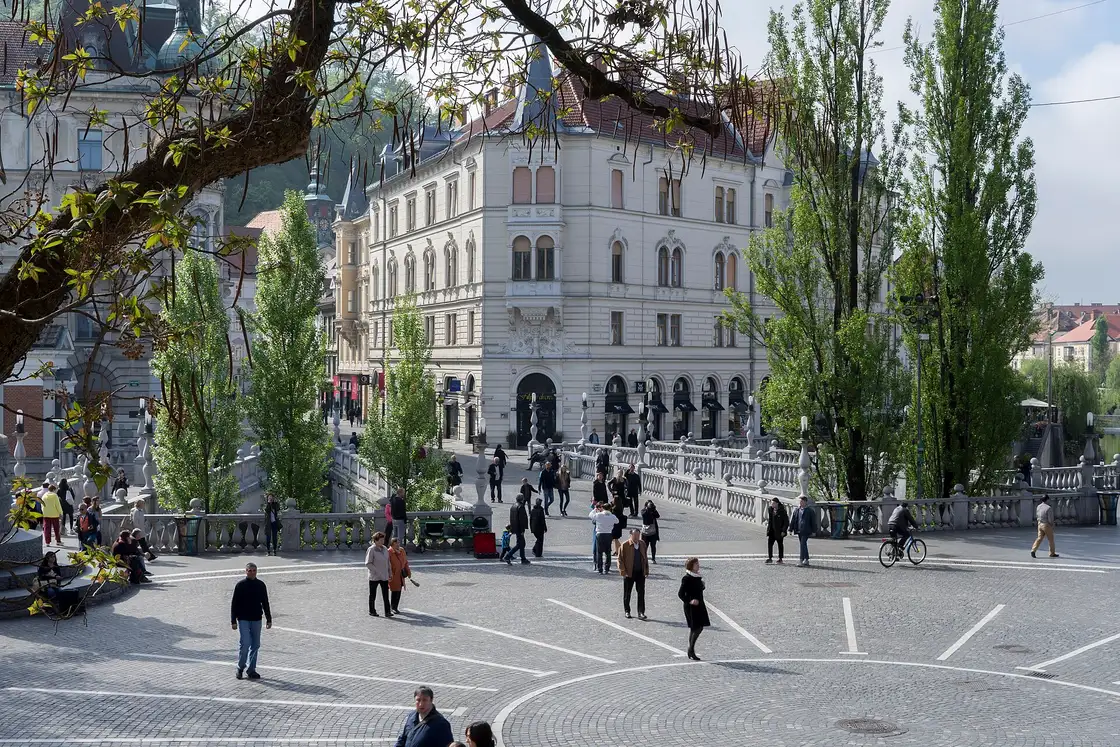
Walking covers almost everything. For the rest, Visit Ljubljana lists the options: free Kavalir electric vehicles inside the pedestrianised centre, aimed at older visitors and people with reduced mobility; the BicikeLJ bike-share, with stations across the wider centre; Ljubljana Bike, which is seasonal rental for longer rides; and the city buses of LPP, paid for with an Urbana card. In winter the bikes are the weakest option, so expect to walk.
Where to stay
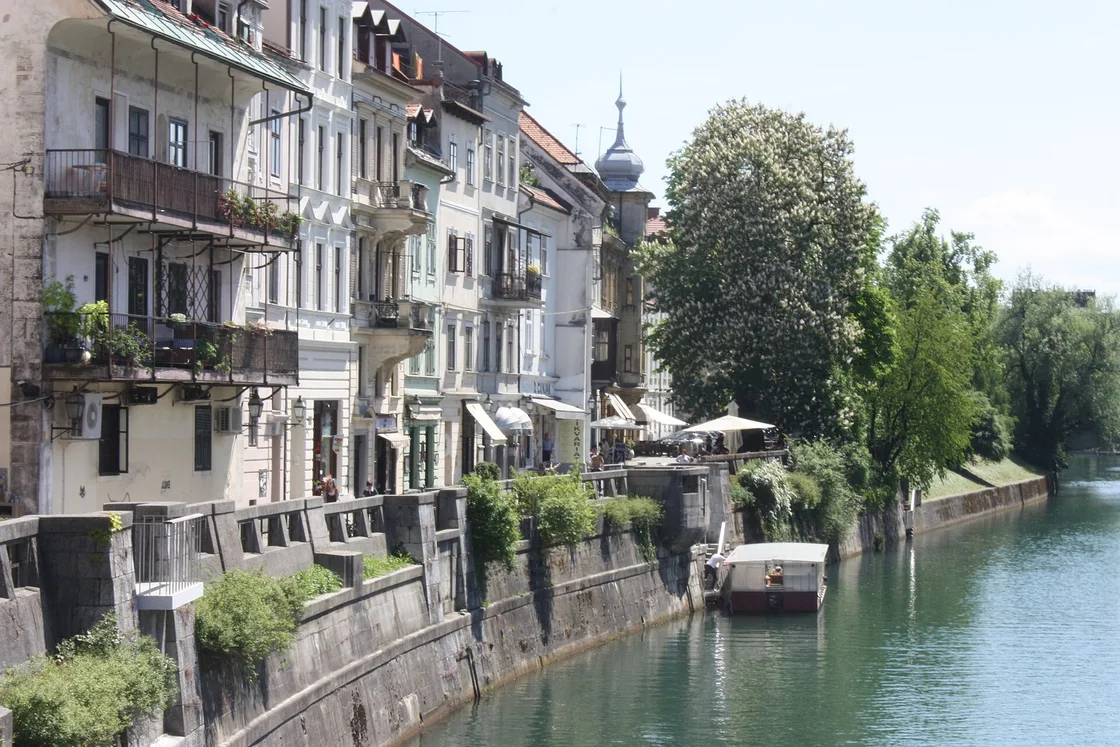
The old town on both banks of the Ljubljanica is the easiest base for a first visit, because everything is walkable and you won’t need a car. Tabor and Poljane are just outside the centre, quieter in the evening and a short walk back. The area around the station suits an early train or the airport bus. For journeys on from the capital, compare train and bus tickets before deciding whether a multi-day IJPP pass fits your plans.
If you arrive by car, check the parking rules and charges before you book: Visit Ljubljana has a page on public car parks, short-term zones and fees, and a hotel with its own parking can be worth the premium. If Ljubljana is the start of a longer drive, the seven-day route by car begins from the capital, and the car hire guide covers the vignette if you drive on from here.
What to see
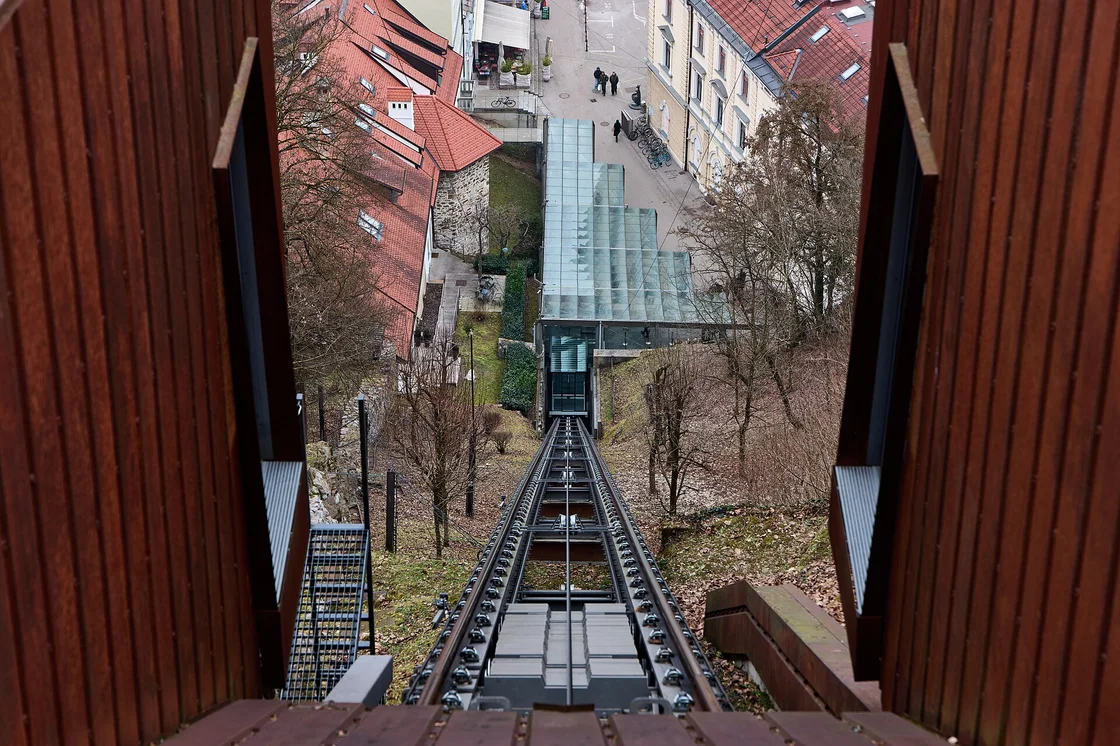
The castle is the obvious start, reached by funicular from the old town. It’s open 365 days a year; from October to April the castle is open 9:00 to 18:00 and the funicular 9:00 to 19:00, and from May to September the castle is open 9:00 to 20:00 and the funicular 9:00 to 22:00. The last ticket is sold an hour before closing. On 31 December both close at 17:00, and on 1 January they open at 10:00. A castle ticket including the funicular return is €19.00 for an adult at the points of sale and €17.10 if you buy online, which saves €1.90 a head; walk up instead and the same ticket without the funicular is €15.00, or €13.50 online. The castle recommends buying a day ahead. These are the castle’s own prices, read on 16 November 2026.
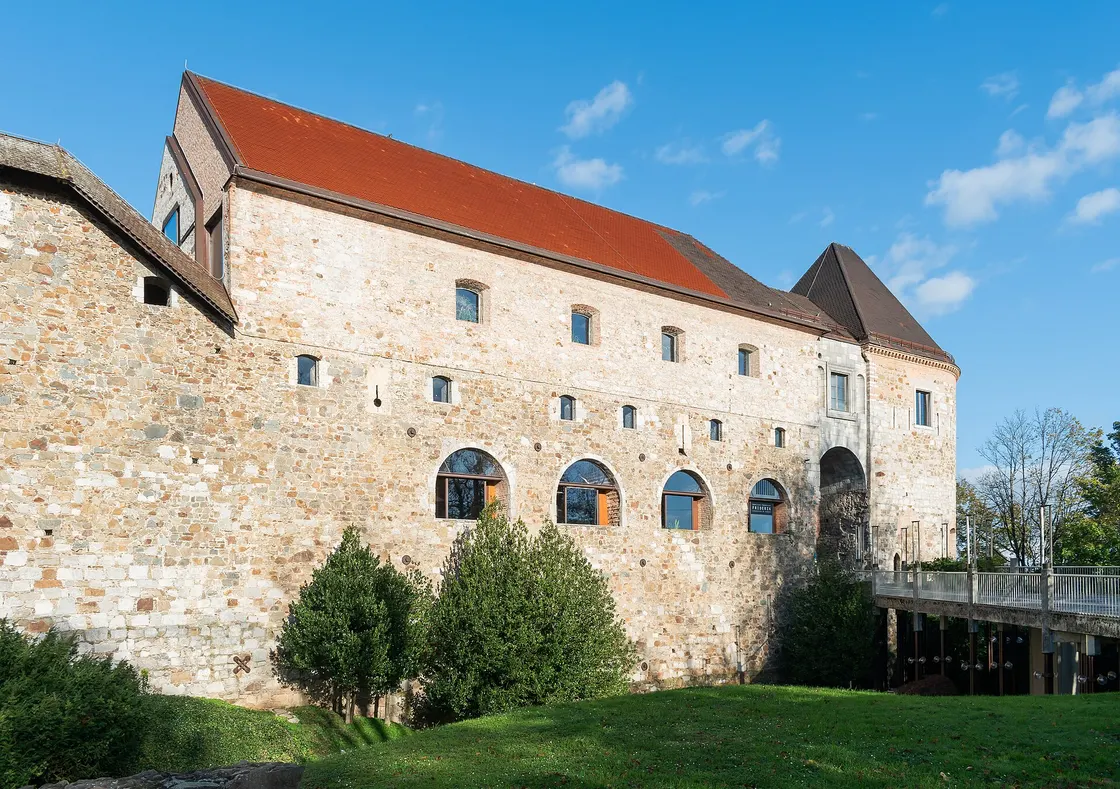
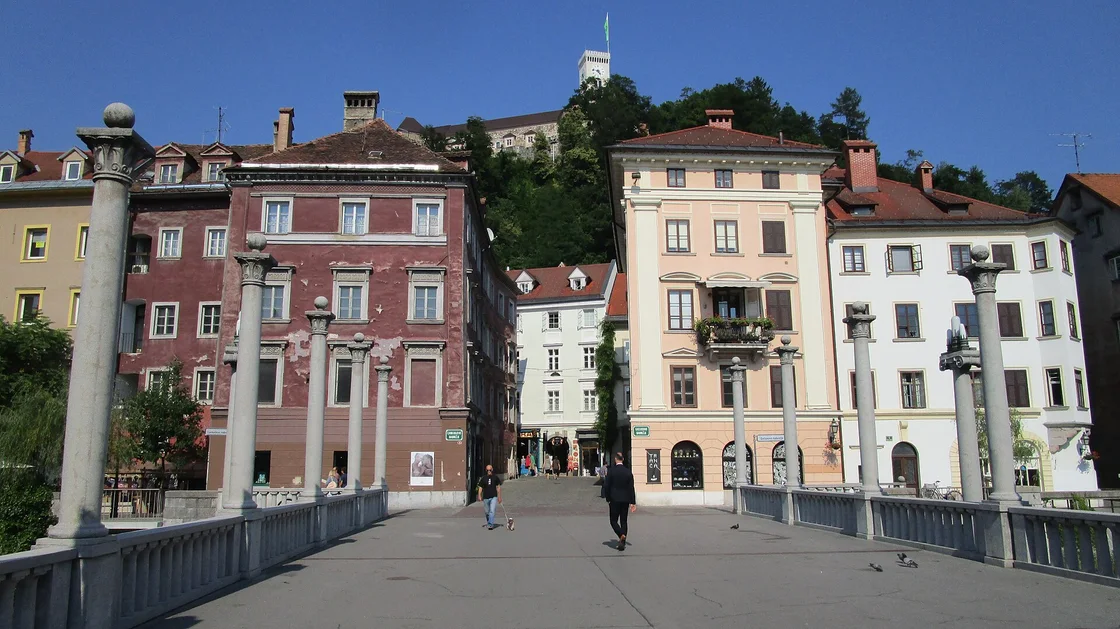
Ljubljana’s centre was reshaped by the architect Jože Plečnik between the two world wars, and UNESCO inscribed his works in the city on its World Heritage list on 28 July 2021. The listing covers squares, parks, promenades, bridges, a library, churches and markets, which is another way of saying you walk through it between the castle and the cafés. You don’t need a guided tour to notice it; look at how the river, the bridges and the market fit together and you’ve seen the point. Allow a half day for a slow walk, and don’t try to tick off everything in one go.
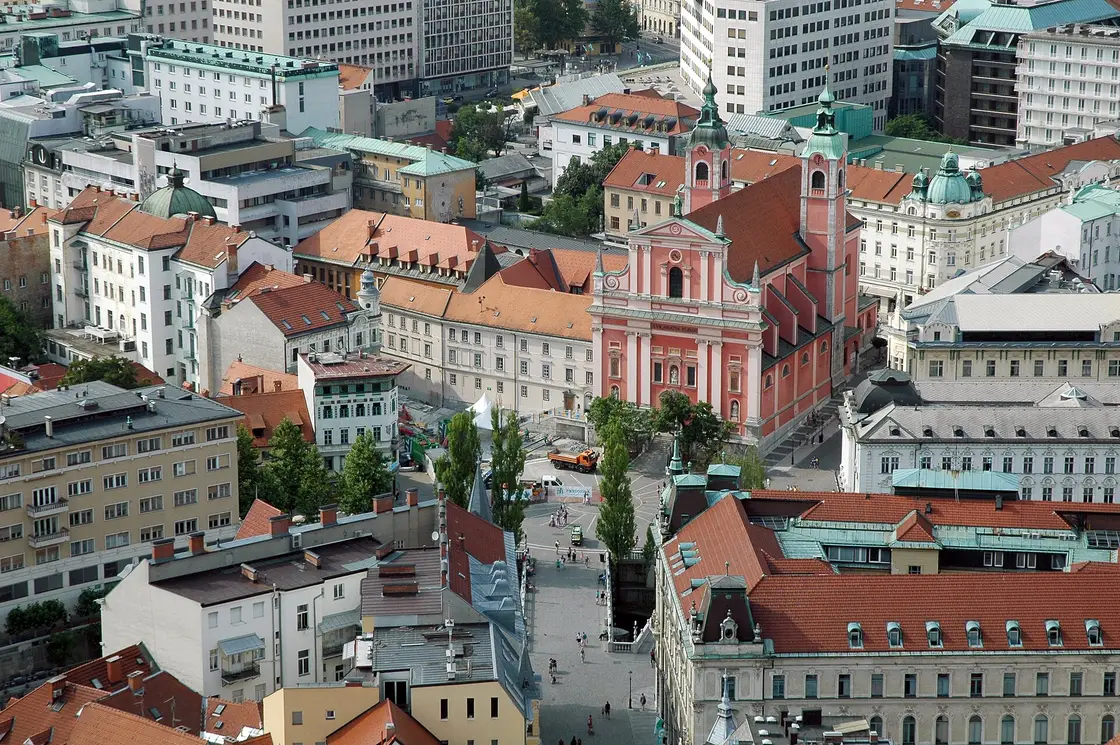
Don’t skip the castle’s viewing tower: from the top you look straight down on Prešeren Square.
The second day: markets, museums and food
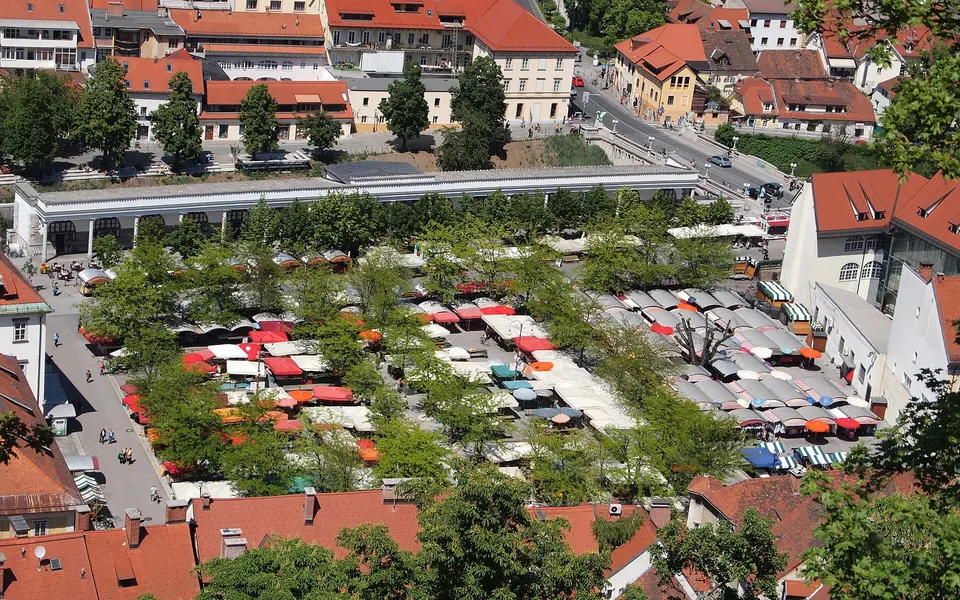
Start at the Central Market, the Plečnik-designed market by the river. Visit Ljubljana says it sells fresh vegetables, fruit, herbs, bread, cheese, meat and gift items, and that it is where locals meet as much as shop. We couldn’t find the market operator’s own hours, so you’ll want to check them for the day you go rather than planning around a time. On Sundays the Antique Flea Market usually sets up on the Breg embankment along the Ljubljanica, but in December Breg is one of the Christmas market venues, so check Visit Ljubljana before you plan a December Sunday around it. In the warmer months Saturdays have the ARTish craft market on the Gallus embankment.
Two museums suit a grey afternoon, and both are a short walk from the old town:
- National Museum of Slovenia (Muzejska 1): open daily 10:00 to 18:00, Thursday until 20:00, and closed on 1 January, 1 May, 1 November and 25 December. An adult ticket for this building is €8, on the price list valid from 1 March 2026, and entry is free on the first Sunday of the month except for major temporary exhibitions. The headline object is the 60,000-year-old Neanderthal flute from Divje babe, which the museum calls the oldest musical instrument in the world.
- National Gallery of Slovenia: open Tuesday to Sunday 10:00 to 18:00, Thursday until 20:00, closed on Monday and on 1 January, 1 May, 1 November and 25 December, and open only until 15:00 on 24 and 31 December. The permanent collection is €10 for a regular ticket, and it’s free on the first Sunday of each month; the last entry is half an hour before closing.
For food, Visit Ljubljana’s street-food page points you to burek, grilled čevapčiči and pljeskavica in flatbread, Carniolan sausage (kranjska klobasa) at the Klobasarna, and štruklji at the Central Market. If the names are new, the food guide explains how štruklji, potica, kranjska klobasa and jota differ. The market’s Friday event, Open Kitchen (Odprta kuhna), is a lunch to plan a day around, but only in season: it runs on sunny Fridays from March to October on Pogačarjev Square, 10:00 to 22:00, with no reservations, and it may be cancelled in rain. The 2026 season ended in October, so in winter it’s the market stalls and the old-town taverns that you have, and Open Kitchen is what you’ll come back for in spring. If you’d like a guide, the tourist board sells a two-hour Yummy Market Walk, Tuesday to Saturday at 11:00, at €76.59 for adults booked online with the booking fee included (€38.82 for children aged 4 to 12), with tastings at seven stops, lunch among them, and two to eight people per group.
The festive season
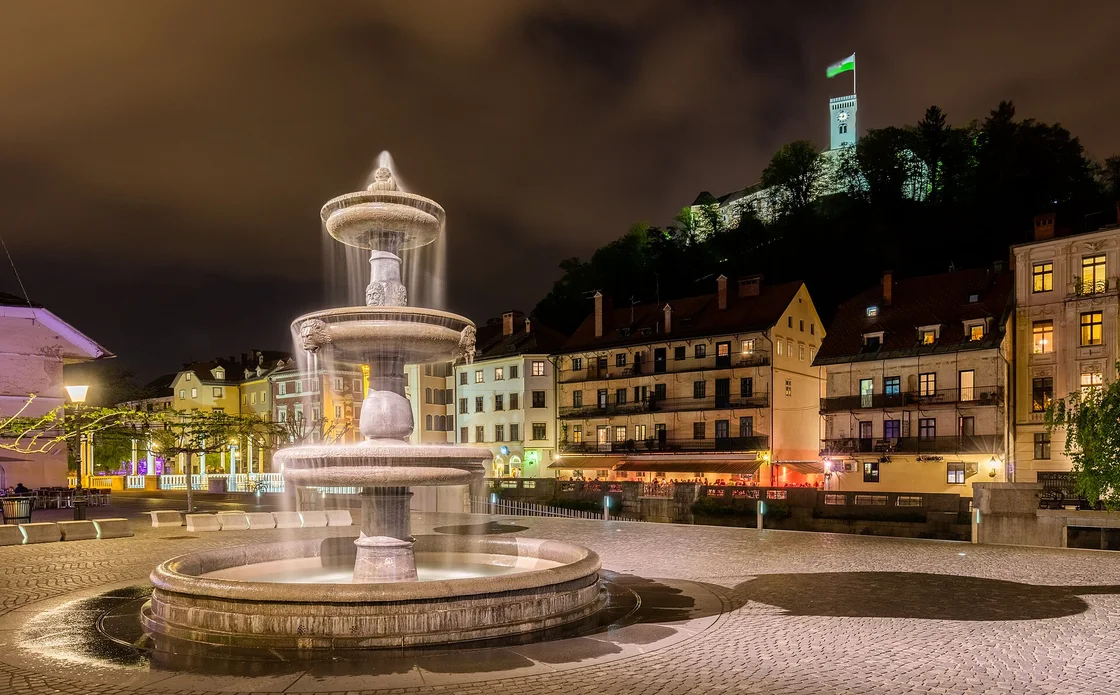
Switch-on day is the Friday before Advent: 27 November 2026, and 26 November in 2027, according to the tourist board’s calendar. The 2026/27 theme is “Chaos. In Order.” Through December the old town hosts stalls, music, workshops and children’s events, and the programme runs until early January. Expect the riverbank and the squares to be busy from late afternoon, so the castle by day and the old town after dark is the order that works.
Day trips from Ljubljana
Two day trips are easy from here, and a third is better with a night away. Postojna Cave is less than an hour away by car, the park says, and hourly buses run from Ljubljana to Postojna, with a local bus on to the cave; Predjama Castle, nine kilometres further, needs a car or a taxi while the park’s shuttle is out of service, as it was on 16 November 2026. Read the Postojna and Predjama guide before you pick a day, because winter cave departures are few. Bled is 50 kilometres by road and the easiest of the mountain places to reach by bus. The coast at Piran is a long day and better as a night away. Without a car, the three-day route by bus keeps Ljubljana as the base for Bled and Postojna.
In the Alps you can go further than Bled: the Julian Alps guide compares Bled, Bohinj, Kranjska Gora and Bovec as bases and shows what’s closed in winter 2026-27. Most of these day trips make sense with a car; only Predjama really needs one in winter, so decide by how much of the day you’re willing to spend on timetables.
A first evening
Arrive, drop your bag, and walk the river from the Triple Bridge towards the market, then take the funicular up to the castle: from October to April the last ticket is sold at 17:00, an hour before closing. Eat in the old town and leave the planning for the next morning.
Photos
Read also

Towns · 8 min read
Bled Beyond the Castle: Getting There, Lake Path, Vintgar
Updated · 17 November 2026Bled from Ljubljana by bus or train, the 6 km lake path, viewpoints, Vintgar Gorge in season and nearby villages, with castle and island tickets in brief.

What to see · 7 min read
Bled Castle or the Island: €19 Castle, €32 by Pletna
Updated · 17 November 2026Bled Castle (€19) for the view and museum, or Bled Island (€32 by pletna) for the crossing and church, and why winter visits start on the island.

Regions · 8 min read
Where to Stay in Bohinj: Four Bases, the Bus and Bohinj Card
Updated · 17 November 2026Where to stay in Bohinj: Ribčev Laz, Stara Fužina, Ukanc or Bohinjska Bistrica, with the Bohinj Card, hourly buses and what is shut in November.

Car hire · 10 min read
Car Hire in Slovenia: Vignette, Deposit and Winter Rules
Updated · 17 November 2026Car hire in Slovenia: the €16 weekly e-vignette and the €300 fine without one, Ljubljana Airport desks, deposits, border rules and winter tyres.