What to Eat in Slovenia and How to Order It
Štruklji, kranjska klobasa, jota, potica and Bled cream cake: what each is, where to try it, what a mountain-hut menu charges, and the menu words.
Order štruklji in Slovenia and you might get a side dish, a lunch in its own right or a sweet pudding: the name describes a rolled dough, not a course. The same goes for the others on this short list (kranjska klobasa, jota, potica, and the cream cake at Bled). Below, what each one is, where it turns up, what a bowl or a slice costs on one mountain-hut menu, and the menu words you’ll meet.
Štruklji: dumpling, side or pudding
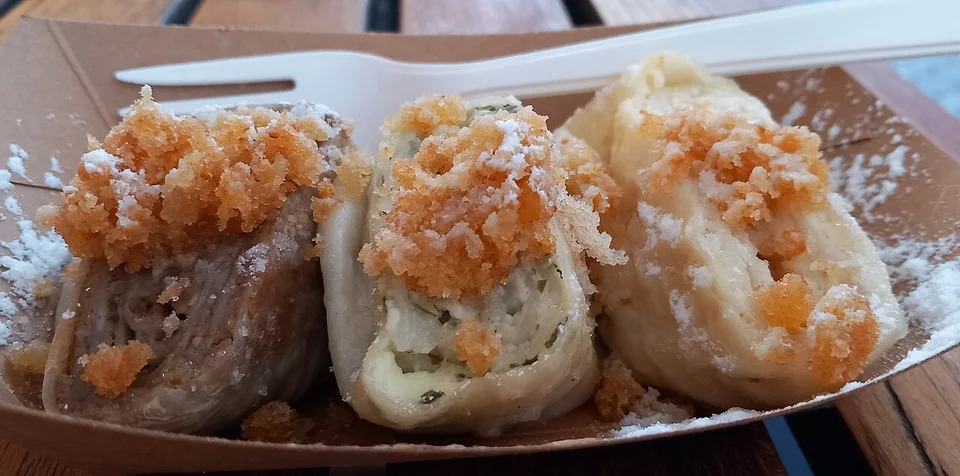
Visit Ljubljana describes štruklji as a boiled or baked roll of dough with sweet or savoury filling, served as a main dish or a side. The fillings it names are tarragon, cottage cheese, walnut, apple and poppy seed. That range is why the same word can turn up beside a roast, as a lunch or after it.
One specialist maker, Moji Štruklji Slovenije, boils and bakes them in five kinds of dough, among them stretched, yeast, wholemeal and buckwheat. MAXi, the retailer that stocks them, calls them handmade and lists sweet and salty fillings. Buckwheat štruklji is the one worth hunting for if you’ve had the standard version before.
Don’t expect the word on every English menu. At Erjavčeva koča, a mountain hut covered below, the line reads “Dumplings”, €12, with štruklji only in the description. Prices on this page come from that hut’s own menu, read on 17 November 2026; the hut sets its own prices, so they will move.
For the Ljubljana end of this (štruklji at the Central Market, kranjska klobasa at the Klobasarna), the Ljubljana guide has the stops.
Kranjska klobasa: the sausage, and what it comes with
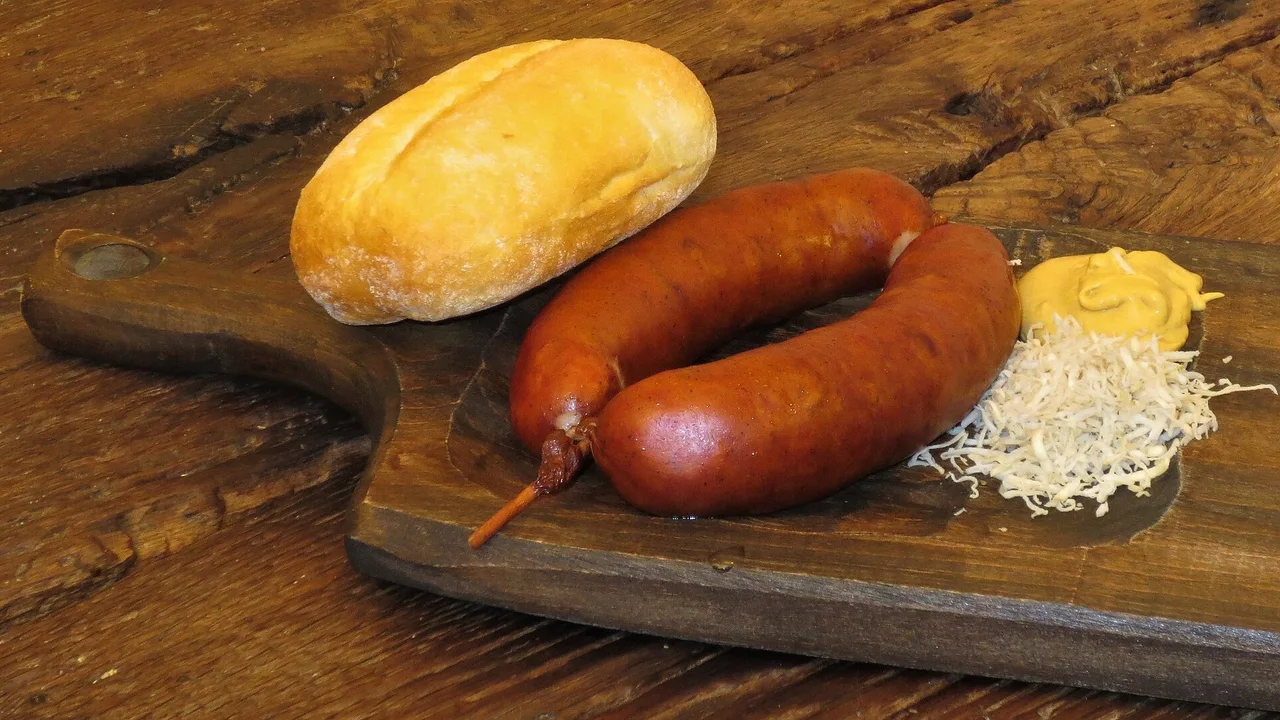
Kranjska klobasa, the Carniolan sausage, is pork seasoned with salt, pepper and garlic, lightly smoked and sold ready for cooking, according to Visit Ljubljana. It comes with mustard and grated horseradish, or sauerkraut, turnip or potatoes. The cover photo shows it the usual way, on a board with bread, mustard and horseradish.
On Erjavčeva koča’s menu the sausage alone is €11.50, with baked potatoes and a little cheese €15, and with potato and cabbage or turnip €19. That’s a €7.50 spread for the same sausage, so compare plates, not just the word “klobasa”.
The name is protected, too. Slovenia’s agriculture ministry lists kranjska klobasa as a Protected Geographical Indication. Slovenska potica is a different kind of label, a Traditional Speciality Guaranteed, which protects the recipe and method and doesn’t tie production to a place. Idrijski žlikrofi, small dough pockets from the town of Idrija, carry the same TSG label. The EU specification says the filling is potato with onion and fat, minced lard or minced smoked bacon, plus marjoram and chives. Vegetarians should know that the traditional filling isn’t meat-free.
Jota and ričet: the mountain-hut bowl
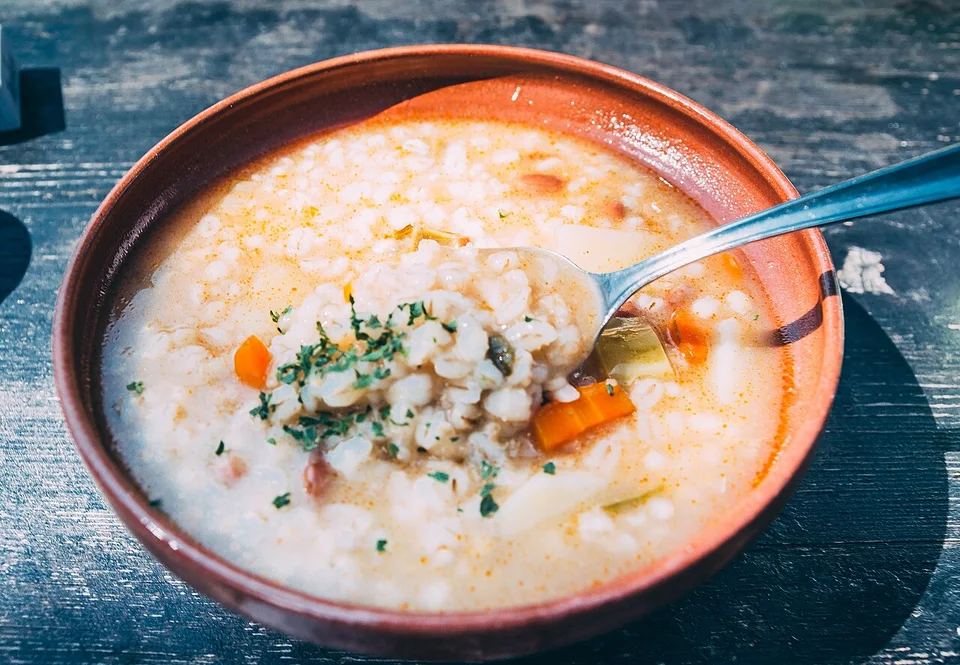
Jota is a thick stew of beans, potatoes and a sour vegetable. The vegetable is where regions part ways, per the national tourism board: Karst jota uses sauerkraut and potatoes, Vipava versions use sour turnip, and Istrian jota is made without potatoes. The sour vegetable named in the menu description tells you which one you’re getting.
Erjavčeva koča stands at 1,525 metres, just below the top of the Vršič Pass road (1,611 metres), in the Julian Alps, between Kranjska Gora and the Soča valley. Its menu lists jota with sauerkraut or sour turnips at €12 and jota with sausage at €14.50, with the sausage added to the bowl. Ričet, a barley stew, is priced the same: €12, or €14.50 with sausages. The same menu has a vegan stew of beans, corn, peppers, carrots and chickpeas at €14, a reminder that plain jota on a menu is a bean stew first and a vegetarian dish only if the kitchen says so.
Put together, a bowl of jota and a slice of gibanica come to €19 on that menu, and the first two pieces of homemade bread are free with a meal (€0.75 each after that). The menu also prints allergen numbers beside almost every dish, which is a faster check than quizzing the waiter in a crowded hut. It’s a mountain-hut price list, so a valley gostilna or a city café will set its own.
It’s open every day in summer, but in winter its schedule varies with group bookings, and its own site says the bus between Kranjska Gora, Vršič and Bovec runs only in the high summer season. Check both before you plan a lunch around it.
Potica, gibanica and the Bled cream cake
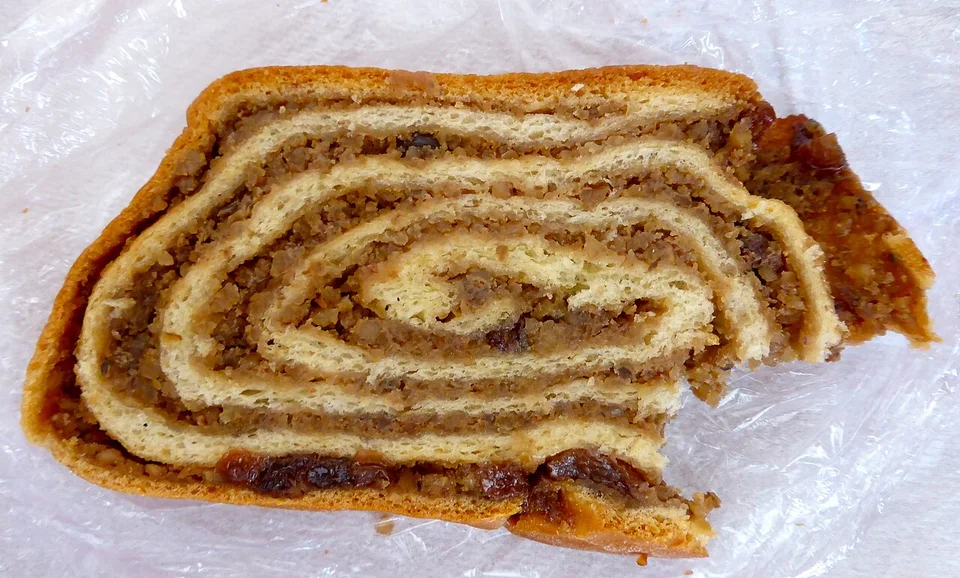
Potica is a yeast-dough roll with a filling that varies by baker; Visit Ljubljana lists walnut, hazelnut, chocolate and poppy seed, and tarragon around Ljubljana. Visit Ljubljana calls it the most characteristic festive dessert. On Bled Island, the Potičnica bakes potica in a range of fillings and flavours, per its visitor information. If you’re on the island anyway, it’s the obvious place for a slice; we wouldn’t cross the lake for it alone.
Bled’s own cake is a different matter. The Bled cream cake (kremna rezina, or kremšnita in everyday speech) is a butter-dough base, vanilla cream and whipped cream under a crisp butter-dough top dusted with icing sugar. Bled’s tourist office says the original has been made since 1953 and is made fresh daily and sold at Kavarna Park, opposite the Park Hotel. Plenty of cafés elsewhere in Slovenia sell their own version under the same name, so “the original” is the phrase to look for if that’s what you want.
Prekmurska gibanica is the north-eastern answer: layers of poppy seed, curd cheese, walnut and apple, according to Visit Ljubljana. It’s a TSG product, like potica, and on Erjavčeva koča’s menu it’s €7.
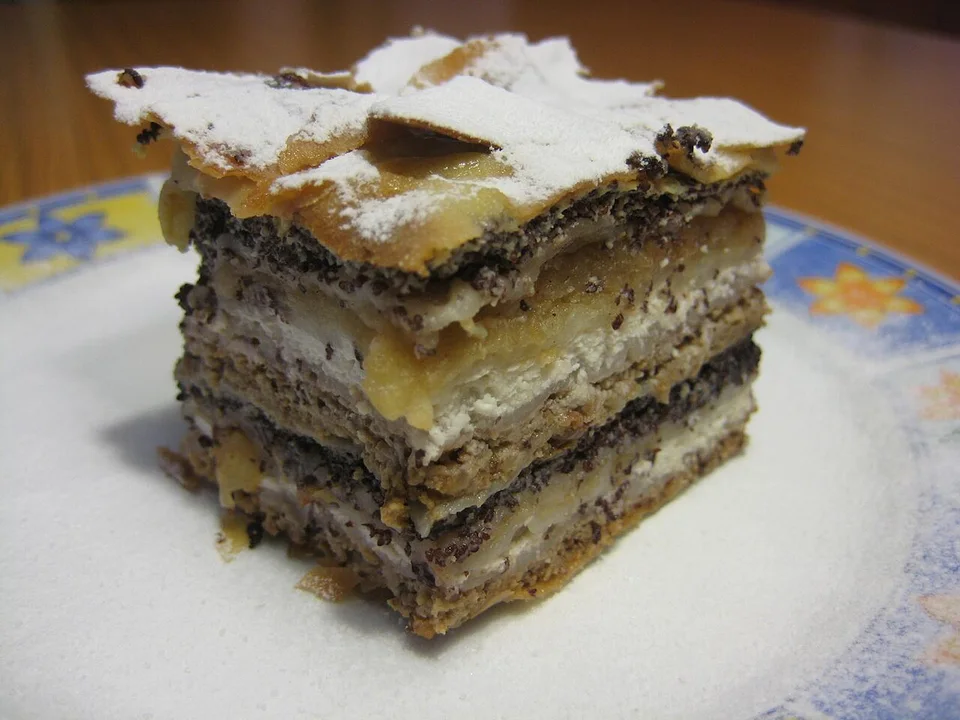
Where the regions meet the menu
Kraški pršut, dry-cured pork leg from the Karst, is the cold-cuts plate to look for on the way to the coast. It pairs with the Karst jota above: a platter first and a bowl of sauerkraut-and-potato stew after On that side of the country, follow the platter with the Karst jota, the sauerkraut-and-potato version above. Visit Ljubljana lists it with gibanica and potica among the dishes that carry a region. A gostilna, the traditional inn Visit Ljubljana describes as a place for good food and wine, is where most of these turn up on one menu.
Menu words
| On the menu | Means |
|---|---|
| juha | soup |
| glavna jed | main course |
| priloga | side dish |
| sladica | dessert |
| domače | homemade |
| dnevno kosilo | lunch of the day |
| gostilna | traditional inn-restaurant |
| s klobaso | with sausage |
| brez mesa | without meat |
“S klobaso” is the phrase that matters for jota and ričet: the plain bowl and the sausage bowl are separate lines on the hut menu, and priced separately. “Brez mesa” is worth saying aloud if you avoid meat, and then check the broth and fat with the kitchen, since neither the name nor an English translation tells you.
Ordering for a group, share the list: one jota, one štruklji, one sausage and one gibanica come to €42.50 on the Erjavčeva koča menu, and passed round the table they’ll tell you within an hour which you’d order again.
If you’d rather be shown
A food walk suits a first day in Ljubljana, when the names above are still new and you’d rather taste several than commit to one. Read the listing’s tasting list and dietary arrangements first, and pick a walk that names štruklji, jota or potica if those are the dishes you’re after.
Read also

Towns · 8 min read
Bled Beyond the Castle: Getting There, Lake Path, Vintgar
Updated · 17 November 2026Bled from Ljubljana by bus or train, the 6 km lake path, viewpoints, Vintgar Gorge in season and nearby villages, with castle and island tickets in brief.

What to see · 7 min read
Bled Castle or the Island: €19 Castle, €32 by Pletna
Updated · 17 November 2026Bled Castle (€19) for the view and museum, or Bled Island (€32 by pletna) for the crossing and church, and why winter visits start on the island.

Regions · 8 min read
Where to Stay in Bohinj: Four Bases, the Bus and Bohinj Card
Updated · 17 November 2026Where to stay in Bohinj: Ribčev Laz, Stara Fužina, Ukanc or Bohinjska Bistrica, with the Bohinj Card, hourly buses and what is shut in November.

Car hire · 10 min read
Car Hire in Slovenia: Vignette, Deposit and Winter Rules
Updated · 17 November 2026Car hire in Slovenia: the €16 weekly e-vignette and the €300 fine without one, Ljubljana Airport desks, deposits, border rules and winter tyres.